2026-09-05 · Alexander
Eastern Subterranean Termites in Ohio: How to Spot Mud Tubes and Spring Swarmers
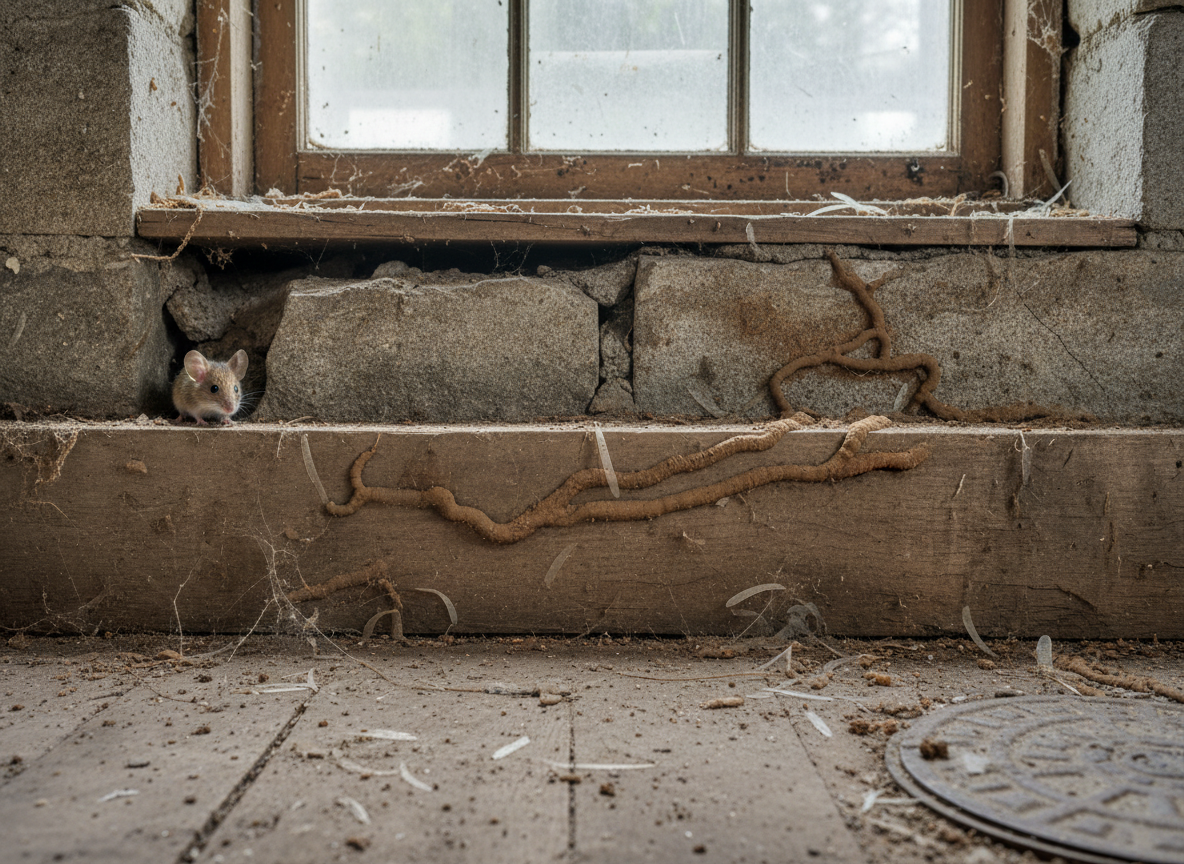
Eastern subterranean termites in Ohio are found by looking for pencil width mud tubes running up foundation walls, porch posts and basement window frames, and by watching for swarms of winged termites on warm, humid days in April and May, usually after rain, on basement windows and sills.
The only termite in Ohio
The eastern subterranean termite is the termite species in Ohio and across the northeastern United States. It lives in the soil in colonies that number in the hundreds of thousands, and it needs constant moisture, which is why it stays connected to the ground. Workers travel from the soil to wood through mud tubes, tunnels built from soil, saliva and digested wood, that protect them from drying out and from ants. They feed on the soft spring wood in lumber, leaving the harder grain behind, so damaged wood looks layered and is packed with mud.
They work slowly compared to the termites of the southern states, and a colony can feed on a house for 2 to 5 years before the damage is noticed. In older homes with wood porches, wood siding near grade, deck framing and original basement window frames that sit on or near soil, the colony has easy access. Stone and block foundations with cracks and voids give them protected routes up to the sill plate and joist ends.
How to spot mud tubes
Mud tubes are the surest sign of active or recent termite activity. They look like dried mud straws, about the width of a pencil, and they run vertically up the inside or outside of a foundation wall, up a porch post, across a basement window frame or along a plumbing pipe. Inside, they are most often found on the basement wall behind the furnace, in the corner of a crawl space, at the base of a support post and along the top of the foundation where the sill plate sits.
To check whether a tube is active, break a 1 inch section out of the middle and leave it. If the tube is repaired within a few days, workers are still using it. If you break it open and find pale, soft bodied, cream colored insects moving inside, that is a live colony. Empty, dry tubes mean the termites have moved or been treated, but old tubes alongside new ones are common.
Other signs to look for:
- Wood that sounds hollow when tapped with a screwdriver handle, or that a screwdriver tip pushes into easily
- Blistered or bubbled paint on a basement window frame or porch post with no water source to explain it
- Mud packed into the joint between a porch post and its base, or into cracks in a basement floor
- A swarmer exit hole, a small round opening in drywall or wood with a few grains of soil around it
Spring swarmers and what they mean
Every spring, mature colonies release swarmers, also called alates: winged reproductive termites that fly a short distance to pair up and start new colonies. In Ohio this happens on the first warm, humid days of April and May, often the day after a rain, and usually in the late morning. The swarm lasts less than an hour. What homeowners find afterward is dozens of shed wings on a basement window sill, in a spider web near a window, or on the floor by a sliding door, along with a few dead or crawling swarmers.
Swarmers are dark brown to black, about three eighths of an inch long, with 2 pairs of equal length wings. A swarm inside the house means the colony is inside the structure or directly beneath it. A swarm outside near a stump or a wood pile is a colony in the yard that may or may not have reached the house.
Termite or carpenter ant
The most common mistake in Ohio basements is calling carpenter ant damage termite damage, and the reverse. They are handled completely differently, so the identification matters.
- Termite swarmers have straight antennae, a thick waist with no narrowing, and 4 wings of equal length. Carpenter ant swarmers have bent, elbowed antennae, a pinched waist, and front wings longer than the back wings.
- Termite damage is layered along the grain and packed with mud. Carpenter ant galleries are clean, smooth and sanded looking, with no mud, and there is a pile of sawdust like frass mixed with insect parts below the nest.
- Termites build mud tubes. Carpenter ants do not.
- Carpenter ants nest in wood that is already wet or rotting, such as a porch roof under a leaking gutter or a window frame with a rotted sill. Termites will eat sound, dry wood as long as they can reach it from the soil.
Old, inactive termite damage is also common in older housing and gets reported as active. Dry galleries with crumbled mud, no live insects and no repaired tubes are previous evidence, not a current infestation, and that distinction matters on a home sale.
What to do about it
Do not spray a mud tube or a swarm with a hardware store product. It kills a few workers and does nothing to the colony in the soil.
- Confirm it. Photograph the tubes, collect a few swarmers or wings in a bag, and get a licensed inspector to confirm the species and whether it is active. In Ohio, termite inspection and treatment is done under a commercial applicator license from the Ohio Department of Agriculture.
- Fix the conditions. Pull mulch back 6 inches from the foundation, get wood siding, porch posts and deck framing off the soil, fix downspouts that dump water against the foundation, and repair rotted basement window frames.
- Treat the colony. The standard treatment is a liquid termiticide applied in a trench around the full foundation and injected through drilled holes in porches, garage slabs and basement floors where a trench is not possible. Non repellent termiticides such as fipronil are carried back to the colony by workers. Bait station systems placed in the soil around the house are an alternative where trenching is impractical, and they need monitoring.
- Get it in writing. A treatment should come with a written record of the linear feet treated and a warranty that covers re treatment if activity returns.
Termites are not a health hazard to people, but they are a structural one. Damage to a sill plate, rim joist, porch beam or floor joist can weaken a floor or a porch to the point where it needs to be replaced, and on a home sale, active termites found on a Wood Destroying Insect inspection will hold up a VA or FHA closing until they are treated.
FAQ
Do termites go away in the winter in Ohio?
No. Eastern subterranean termites move below the frost line in winter and keep feeding on wood inside heated structures, especially near furnaces and warm basement walls. Activity slows outdoors but the colony survives.
What time of year do termites swarm in Ohio?
April and May, on warm, humid days, often the day after rain, in the late morning. Finding shed wings on a basement window sill during those months is the most common way homeowners discover a colony.
Can I treat termites myself?
Not effectively. Over the counter sprays kill exposed workers and leave the colony in the soil. The termiticides that eliminate colonies are applied by trench and injection at label rates by a licensed applicator, and some are restricted use products that are not sold to the public.
If you have found tubes or swarmers, a termite treatment with a written warranty is the next step, and it starts with an inspection.