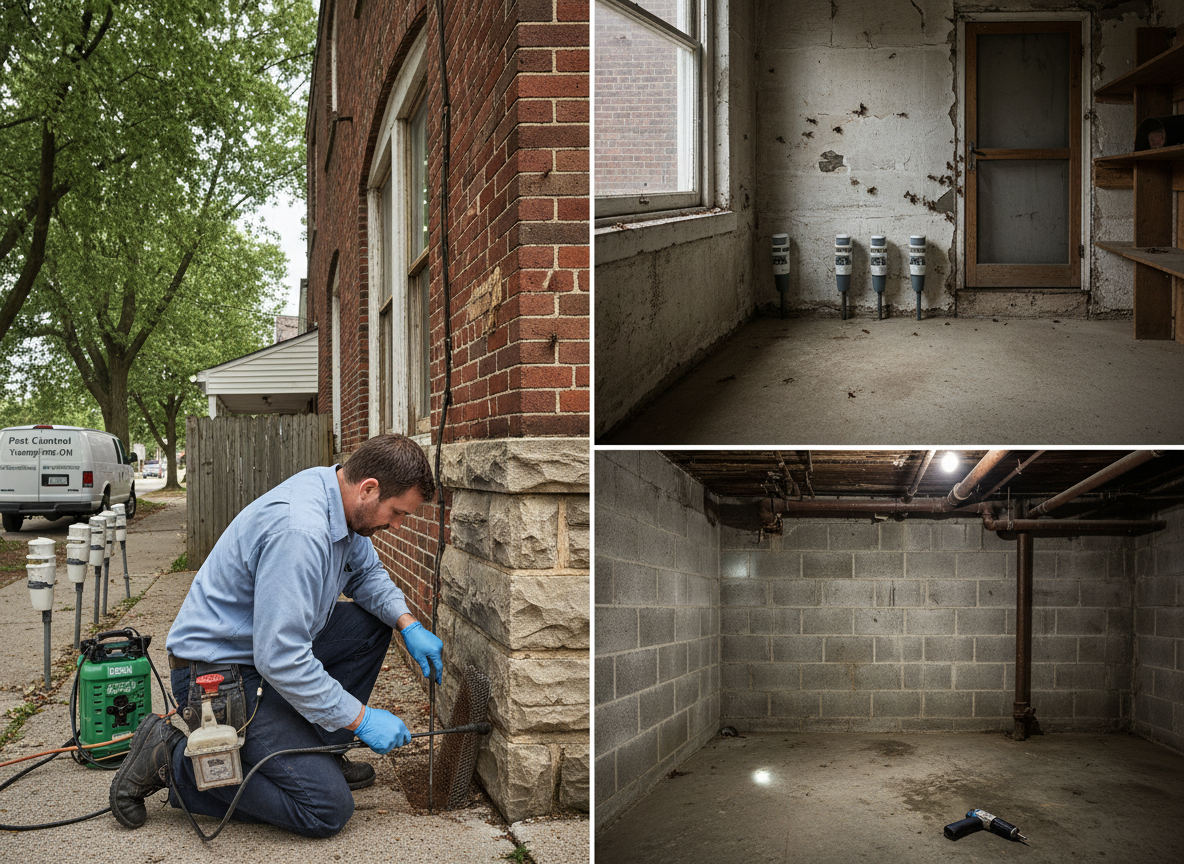
Mosquito and tick control from Pest Control Youngstown OH treats the places those pests actually live on your property. Mosquitoes rest during the day on the undersides of leaves in shaded shrubs, hedges, ivy, under decks and along fence lines, so those surfaces get a residual barrier treatment with a backpack mist blower. Standing water that cannot be dumped, such as a clogged gutter, a low spot that holds rain or an ornamental pond, is treated with a larvicide. Ticks are concentrated in the transition zone between mowed lawn and woods, tall grass or leaf litter, and along stone walls and wood piles where mice travel, so those edges get a granular or liquid treatment. Alexander inspects the yard first and shows you where the sources are.
Youngstown summers are humid, and the mosquito season runs from the first warm week in May through the end of September. Yards backing onto Mill Creek Park, the Mahoning River, Yellow Creek in Poland and Struthers, or any wooded lot in Canfield and Poland carry more mosquitoes and ticks than a yard in the middle of a Boardman subdivision. Tick calls have risen across northeast Ohio, with blacklegged ticks that carry Lyme disease and American dog ticks both established in Mahoning County. Vacant lots next door with uncut grass, tires and debris are mosquito breeding sites that you cannot treat yourself, and City of Youngstown Code Enforcement handles those complaints. Clogged gutters on 2 story homes with mature maples are the most common breeding site found on a first inspection.
Mosquito and tick products are applied under an Ohio Department of Agriculture commercial applicator license and by label, which limits application near water, blooming plants that bees are working, and vegetable gardens. Pyrethroid residuals are the standard barrier product, with larvicides that target mosquito larvae used in standing water. Applications are made when wind is low and are kept off flowering plants to protect honey bees and other pollinators. People and pets stay off treated vegetation until it is dry, typically about 30 minutes to an hour in summer. Gardens are skipped or treated with products labeled for edible plants. If you keep bees, say so when booking.
The most common reason a mosquito program disappoints is a source that is off the property or overlooked. A neighbor's tarp covered pool, a storm drain catch basin at the curb, a bird bath that never gets dumped, or a corrugated downspout extension holding water will produce mosquitoes no matter how well the vegetation is treated. Alexander walks the property line and points out what is feeding the population, including what to ask a neighbor to fix. Tick programs fail when the yard edge is treated but the leaf litter and wood pile that mice live in are left alone, because mice carry the immature ticks. Clearing that habitat is half the job.
Technician insight
On 2 story Youngstown homes with mature maples, the first place to look for mosquito breeding is the gutter. A gutter holding an inch of leaf slurry produces mosquitoes all summer, and it gets missed because nobody looks up. The second place is the corrugated downspout extension lying in the grass.
A Wooded Lot Backing Onto Mill Creek Park
A typical program on a South Side or Boardman lot backing onto the park: the yard is walked, the clogged gutters and a bird bath are noted, the shaded shrubs and the underside of the deck get a barrier treatment, the low spot by the fence is larvicided, and the lawn to woods edge with its leaf litter and wood pile gets a granular tick treatment. Visits repeat every 3 to 4 weeks through September with a written note each time on which sources still need fixing.
Mosquito and Tick Control Services We Offer
✓Monthly Mosquito Barrier Treatment
A May through September program treating shaded vegetation, under decks and fence lines every 3 to 4 weeks, with larviciding of standing water.
✓Tick Yard Treatment
Spring and summer treatment of lawn edges, wooded borders, stone walls, wood piles and leaf litter where blacklegged and American dog ticks wait for hosts.
✓Event Mosquito Treatment
A one time barrier treatment 24 to 48 hours before a graduation party, wedding or backyard event to knock mosquitoes down for the day.
✓Standing Water and Larvicide Treatment
Treatment of ponds, low spots, clogged gutters and drainage areas with a larvicide, plus a written list of sources to eliminate.
✓Flea and Tick Yard Treatment for Pets
Treatment of dog runs, kennels, shaded pet areas and under porches where fleas and ticks concentrate, coordinated with indoor flea treatment when needed.
✓Tick Habitat Reduction Advice
A walk through with a written plan for mulch barriers, brush clearing, wood pile relocation and leaf litter removal that reduces tick contact.
How it works
- 1
Yard Inspection
The property is walked to find resting vegetation, standing water, tick edge habitat and off property sources, and a map is drawn.
- 2
Source Correction List
You get a written list of what to dump, clean or clear, and what to ask a neighbor or the city to handle.
- 3
Barrier and Larvicide Treatment
Vegetation is treated with a mist blower, standing water is larvicided and tick edges get a granular or liquid application.
- 4
Monthly Return Visits
Treatments repeat every 3 to 4 weeks through September, with a free re treatment if mosquitoes are biting again within 2 weeks of a visit.
Pricing
Mosquito and tick pricing is per visit and depends on the lot size, how much vegetation and shade the yard holds, whether it borders park land, woods or water, and whether standing water on the property needs larviciding. A quarter acre Boardman lot is at the low end. A wooded Poland lot bordering Yellow Creek is priced higher because of the treatment area and tick habitat. A season program is priced lower per visit than one time event treatments.