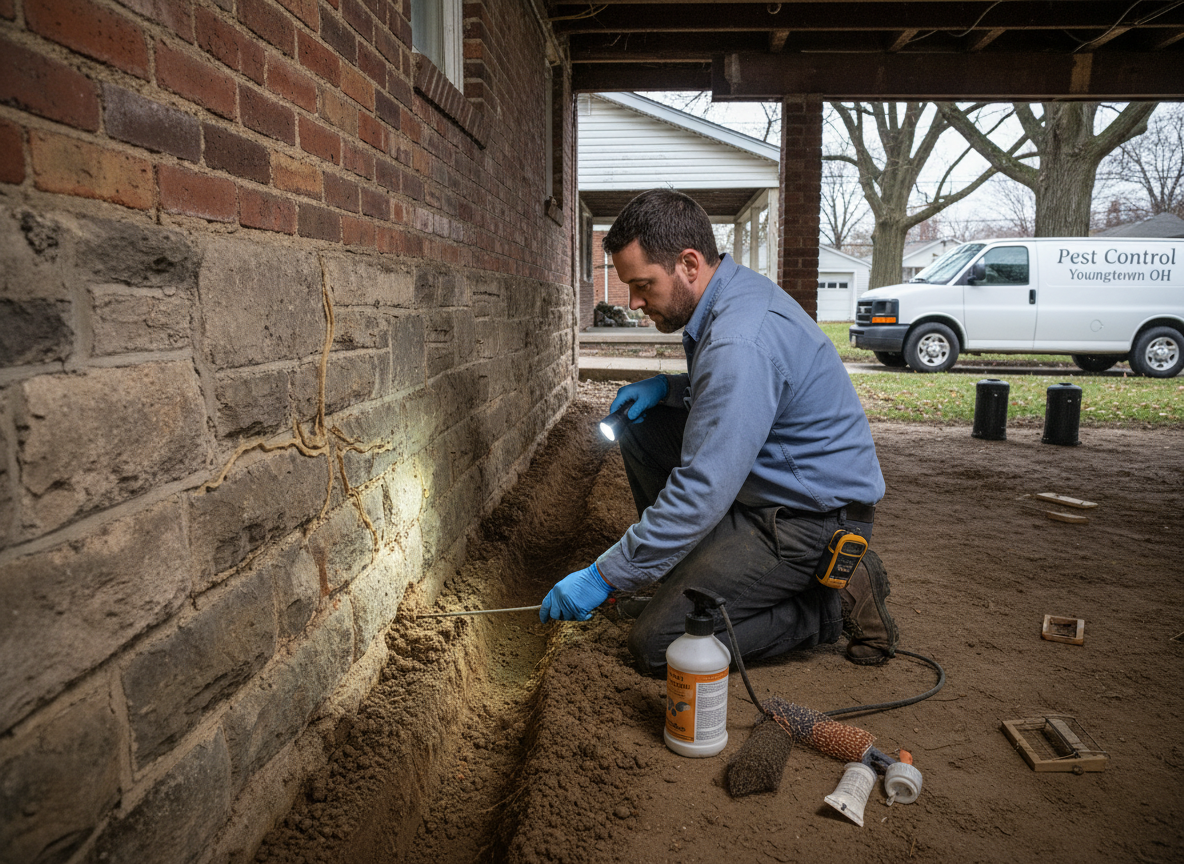
Residential pest control from Pest Control Youngstown OH starts with a full inspection of the house before anything is applied. Alexander walks the exterior at foundation height looking at the sill plate, window wells, porch framing, gutters, downspouts and where wires and pipes enter the wall. Inside, the basement gets the most time: floor drains, the sump pit, joist bays over the foundation wall and the area around the sewer lateral. Then the kitchen, bathrooms and attic access. The treatment that follows is built from what was found, which is usually a combination of a perimeter barrier treatment with a residual insecticide, crack and crevice work indoors, gel bait for ants or roaches, dust in wall voids where needed, and snap traps or tamper resistant bait stations for rodents.
Youngstown houses make general pest control harder than a newer suburb. A 1920s frame home on a stone foundation has hundreds of small gaps where mortar has fallen out, and a full basement with a floor drain gives American cockroaches a direct route up from the sewer. Vacant houses and demolished lots next door hold mice, rats and raccoons that move into the occupied home as soon as the weather turns. Fall brings stink bugs, boxelder bugs and Asian lady beetles onto sunny siding, and they slip into wall voids behind vinyl siding. Summer humidity feeds ants, centipedes, millipedes and springtails in damp basements. The recurring program is timed to that calendar, with the fall visit scheduled before the first frost and the spring visit before ant and termite swarm season.
Every application is made under an Ohio Department of Agriculture commercial applicator license and follows the product label, which controls where a product can be applied, at what rate and how long people and pets stay off it. Indoors that usually means a liquid residual along baseboards and behind appliances with a dry time of 2 to 4 hours, gel baits placed where children and pets cannot reach them, and dusts confined to voids. Product choice changes for homes with birds, reptiles, fish or crawling toddlers. Nothing is called harmless. You get the re entry guidance in writing and the product names if you want to look up the labels yourself.
The jobs that go wrong are the ones where the cause was never fixed. A quarterly spray does nothing for mice coming under a garage door with a torn seal, and it will not stop odorous house ants that are nesting in a wet wall under a leaking gutter. Alexander flags those conditions on the first visit and either fixes them, such as installing a door sweep or packing copper mesh into a foundation gap, or tells you what a contractor needs to do. The other common failure is treating for the wrong pest: carpenter ant frass read as termite damage, cellar spiders reported as brown recluse, or drain flies from a dry floor drain trap treated as fruit flies. Identification comes first, every time.
Technician insight
The most common miss on a Youngstown residential job is the gap around the sewer lateral where it passes through the basement wall. It is behind the furnace, in the dark, and it is the mouse and sewer roach highway in most 1900s to 1940s homes. It gets checked and sealed on the first visit.
A 1920s Two Story on the South Side
A typical first visit on a South Side two story with a full basement and detached garage: mouse droppings along the sill plate, a garage door with no bottom seal, odorous house ants under the front porch and stink bugs at the west facing window frames. The visit covers a perimeter treatment, gel bait at the ant entry, snap traps on the basement runways, copper mesh at the lateral and a new garage door seal, then the home goes on quarterly service with the next visit timed before the first frost.
Residential Pest Control Services We Offer
✓Quarterly Pest Control
A 4 visit per year program with a perimeter barrier, interior crack and crevice work and rodent monitoring, timed for spring ants, summer wasps, fall mice and winter follow up.
✓One Time Pest Treatment
A single inspection and treatment for a defined problem such as a wasp nest, an ant trail or a spider issue in a garage, with a 30 day re service.
✓Seasonal Stink Bug and Lady Beetle Treatment
A late August or September exterior treatment of south and west facing siding, soffits and window frames before overwintering pests get inside.
✓Spider and Basement Pest Treatment
Treatment of basements, garages and crawl spaces for cellar spiders, wolf spiders, centipedes, millipedes and silverfish, plus advice on moisture control.
✓Pantry Pest Treatment
Inspection and treatment for Indian meal moths, flour beetles and fruit flies, including finding the infested product and treating shelving and cracks.
✓Move in Pest Inspection and Treatment
An inspection and preventive treatment of a home before you move furniture in, common on older Youngstown purchases and rentals with unknown history.
✓Garage and Shed Pest Control
Treatment of detached garages and sheds for mice, spiders, wasps and overwintering insects, with sealing of gaps at the slab and door.
How it works
- 1
Inspection
Exterior, basement, kitchen, bathrooms and attic access are checked, with a moisture meter used on suspect wood and a flashlight on every foundation gap.
- 2
Written Plan and Price
You see the pest identification, the conditions found, the products to be used, the price per visit and the service interval before treatment starts.
- 3
Initial Treatment
Perimeter barrier, interior crack and crevice, baits, dusts and any traps or stations are placed, and door sweeps or mesh are installed where a quick fix will stop entry.
- 4
Scheduled Visits and Re Service
Quarterly, bi monthly or monthly visits follow, with a free call back between visits if a covered pest returns.
Pricing
The price of residential pest control depends on the square footage and number of stories, whether there is a full basement, crawl space or detached garage, how established the pest problem is on the first visit, and whether the home is on a one time or recurring plan. A quarterly plan on a typical 2 story Youngstown home with a basement is a set fee per visit, with the first visit priced higher because it includes the inspection and an initial knockdown. Homes with active rodent entry, heavy German cockroach populations or multiple pests on the first visit cost more up front. Bed bugs and termites are always priced separately.